- IA | NOTION | @UMD
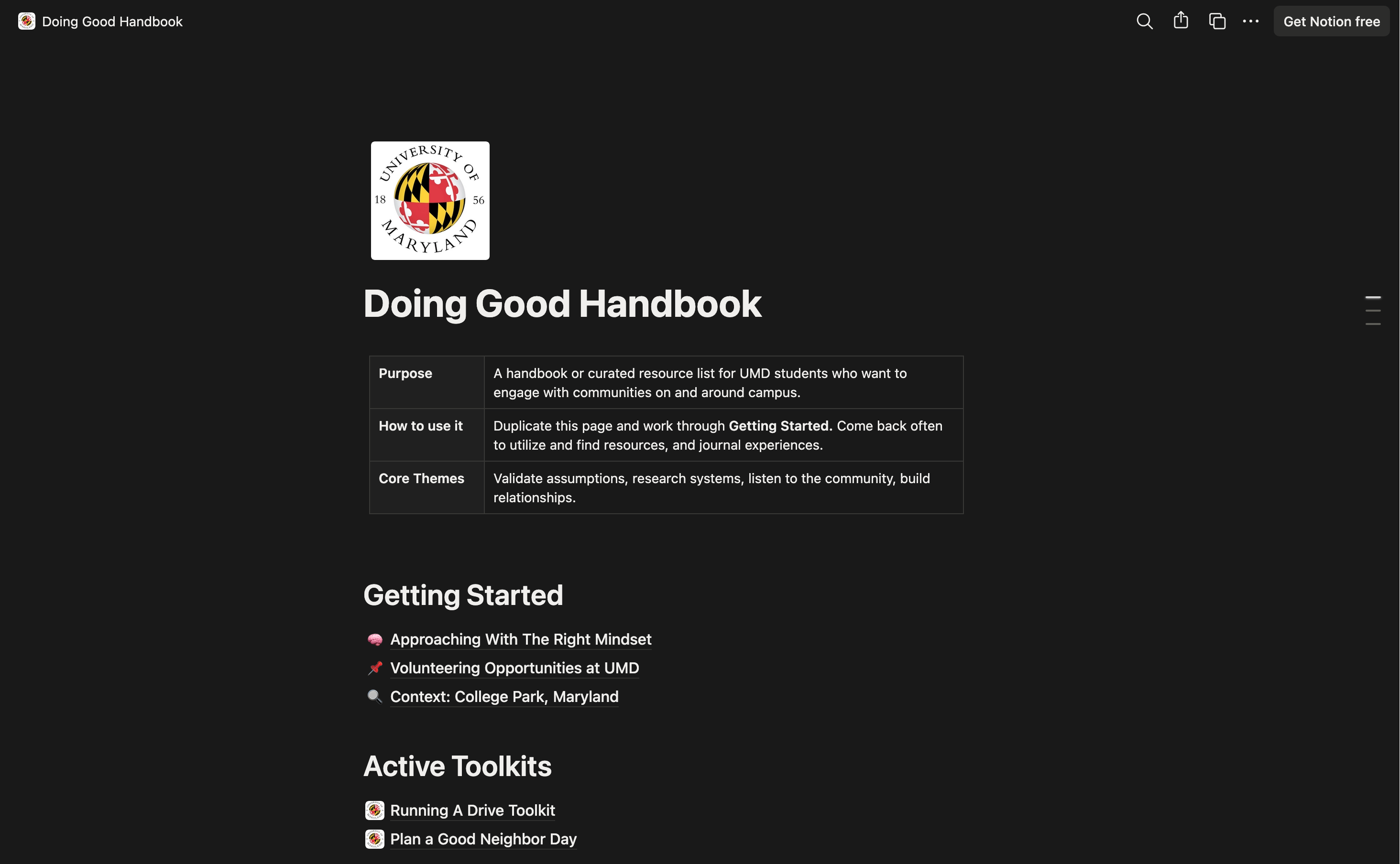
Doing Good Handbook
CLIENT & PROBLEM
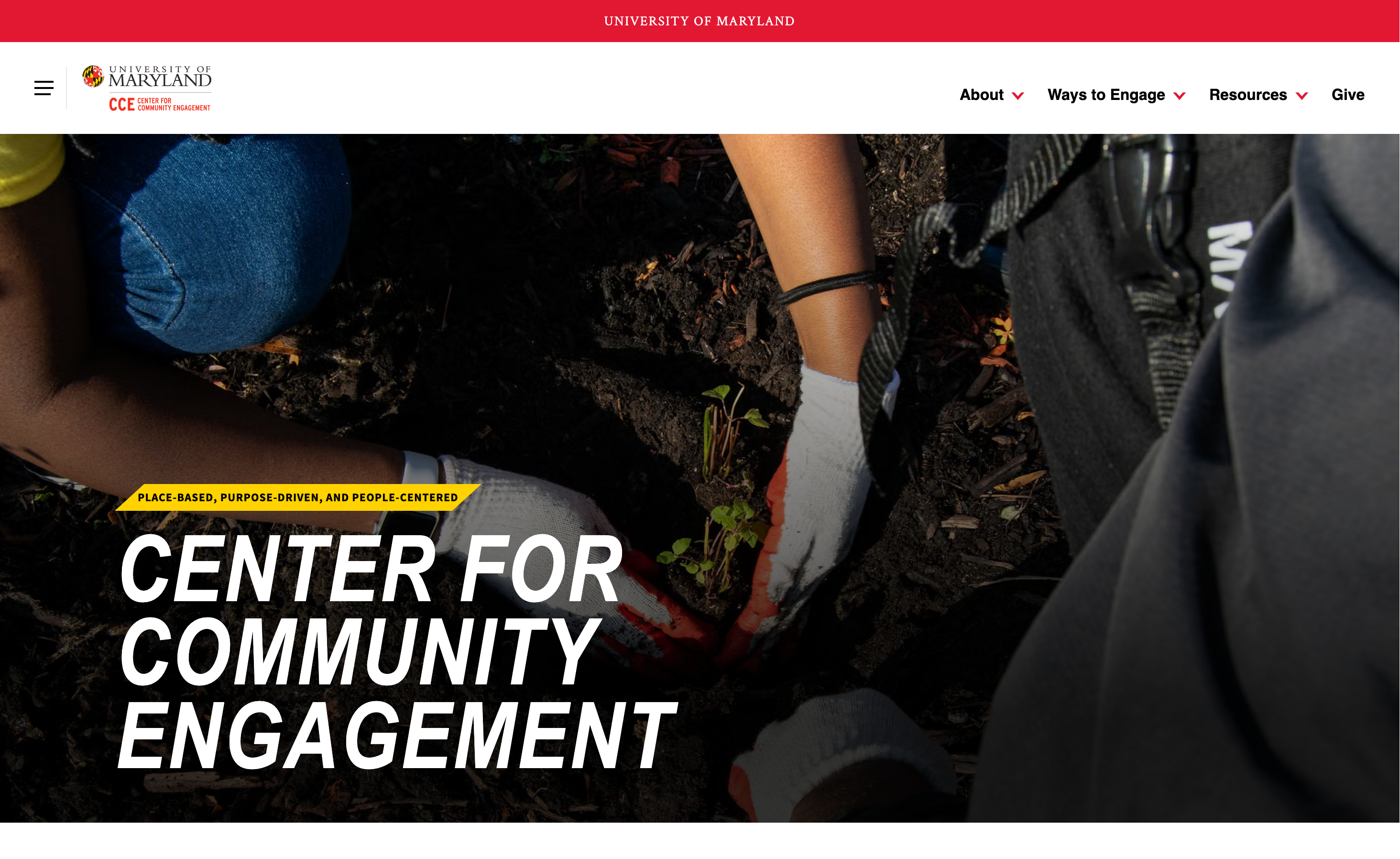
The UMD CCE aims to help students engage with communities on and around campus through
volunteering, civic engagement, and community initiatives. However, many students struggle to find
opportunities, navigate fragmented information, or approach community work with sufficient context
and awareness.
The original scope focused on designing two digital toolkits: “Running
a Drive” and “Planning a Good Neighbor Day Project,” aimed at guiding students through
UMD-specific logistics and community engagement resources. Over time, the project evolved into a
broader handbook system after recognizing the need for a more centralized and scalable platform.
FEATURES & PURPOSE

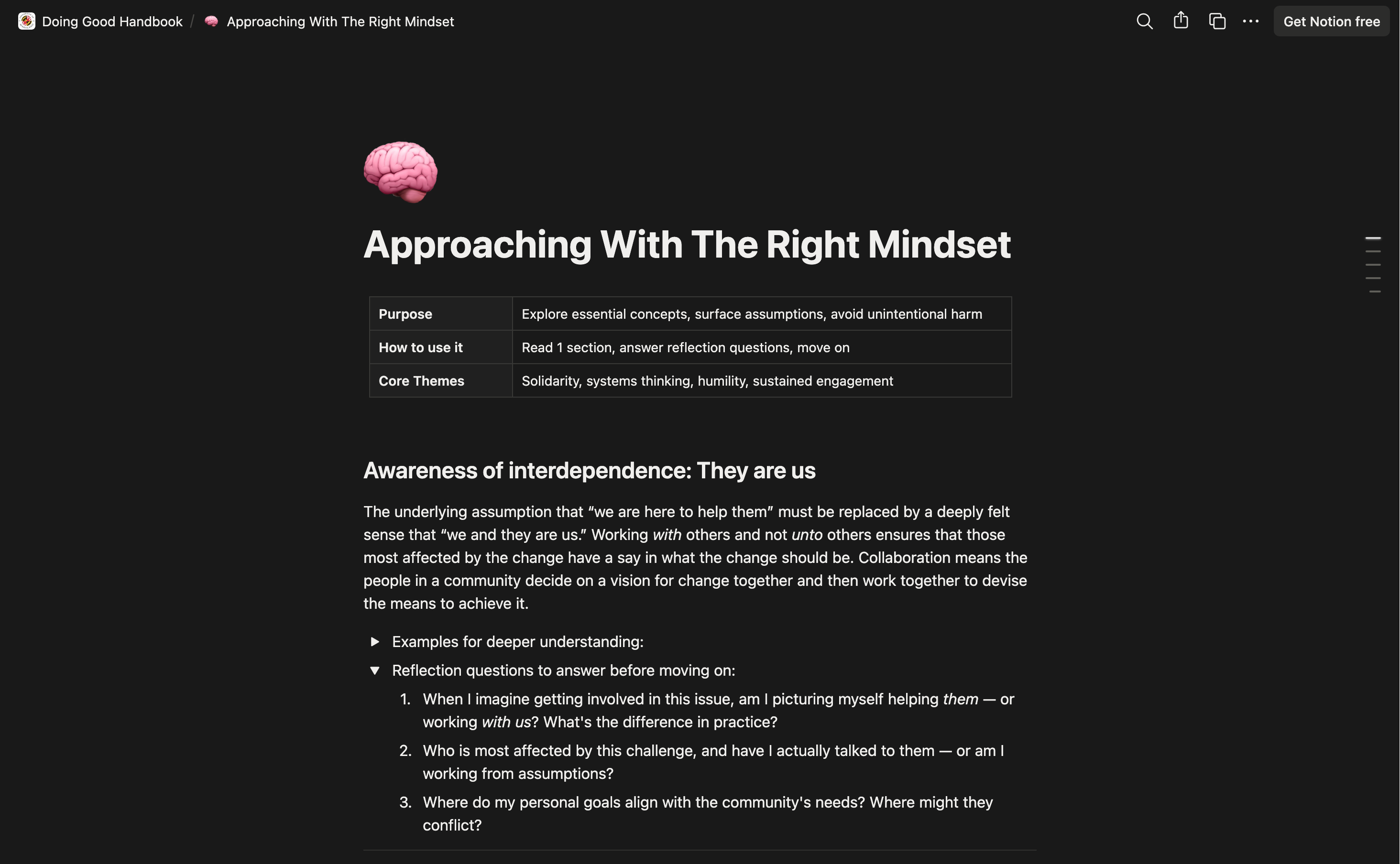
LEARNING MODULES
Through curated readings and reflection prompts, students start by exploring essential concepts like solidarity, systems thinking, humility, and sustained engagement. The goal was to encourage more thoughtful and context-aware participation in community work.
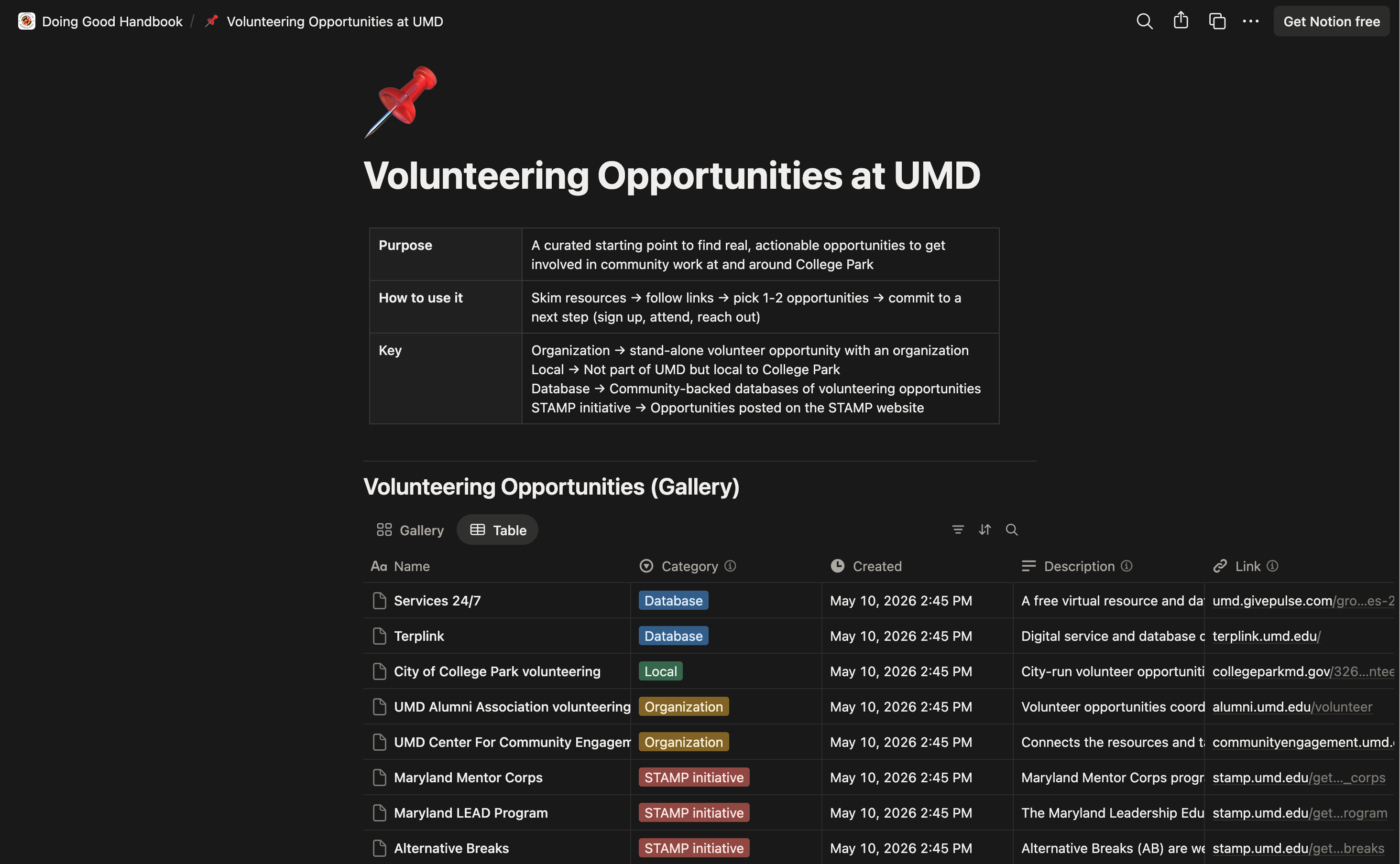
VOLUNTEER OPPORTUNITIES
A curated collection of actionable opportunities to get involved in community work at and around College Park.
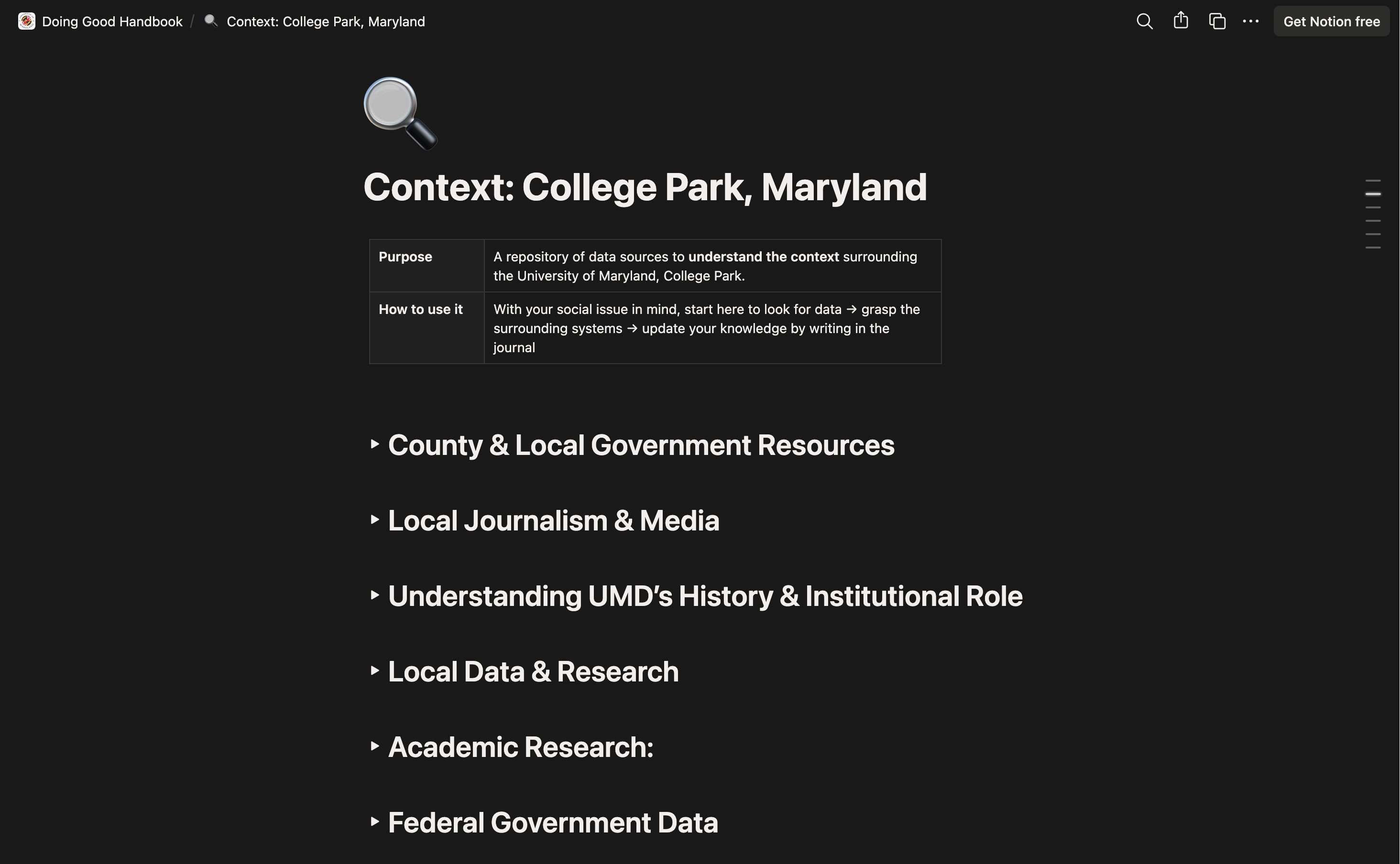
COMMUNITY CONTEXT
A repository of local data sources, research materials, and community references intended to help students better understand the social context surrounding the University of Maryland and College Park area.
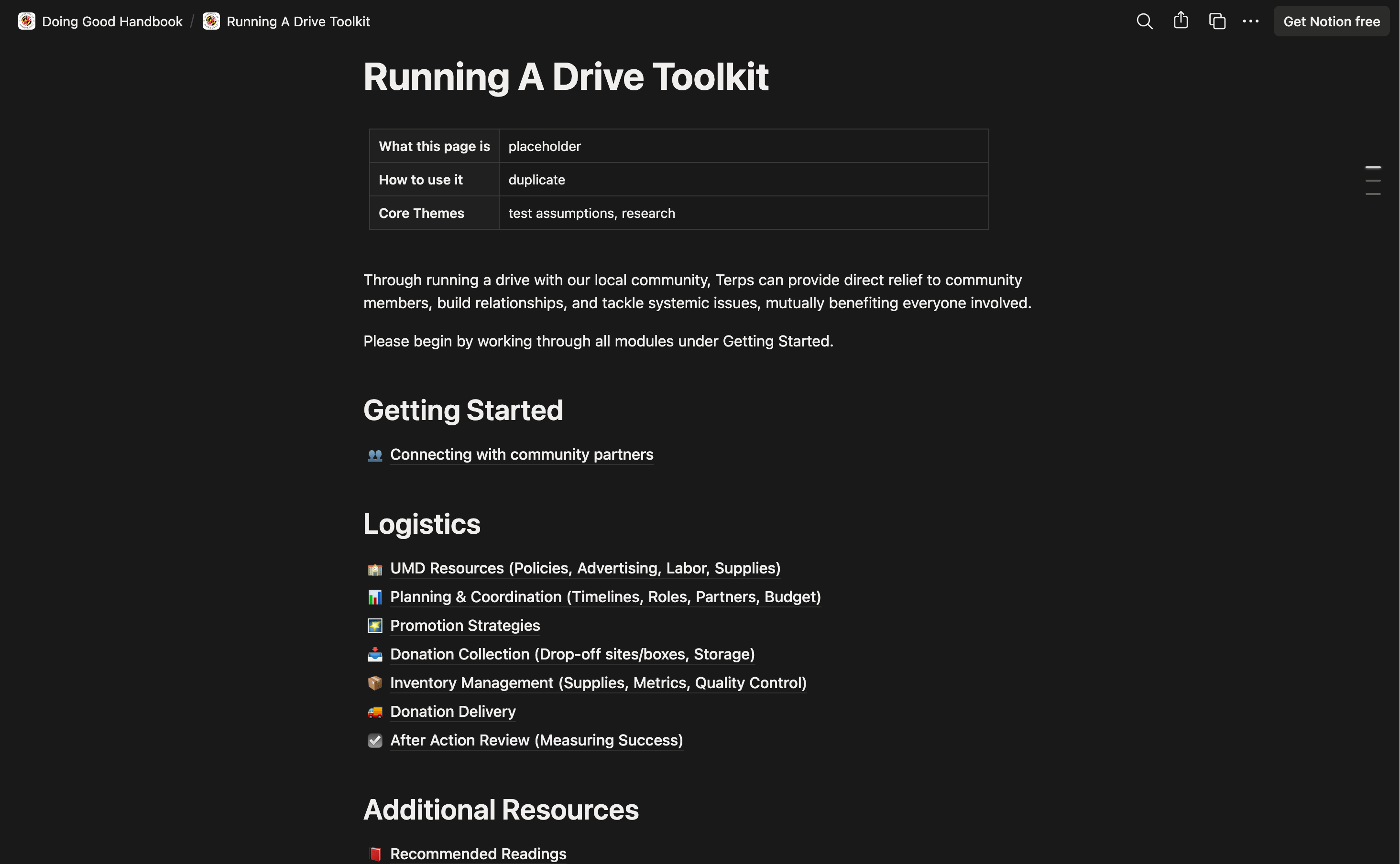
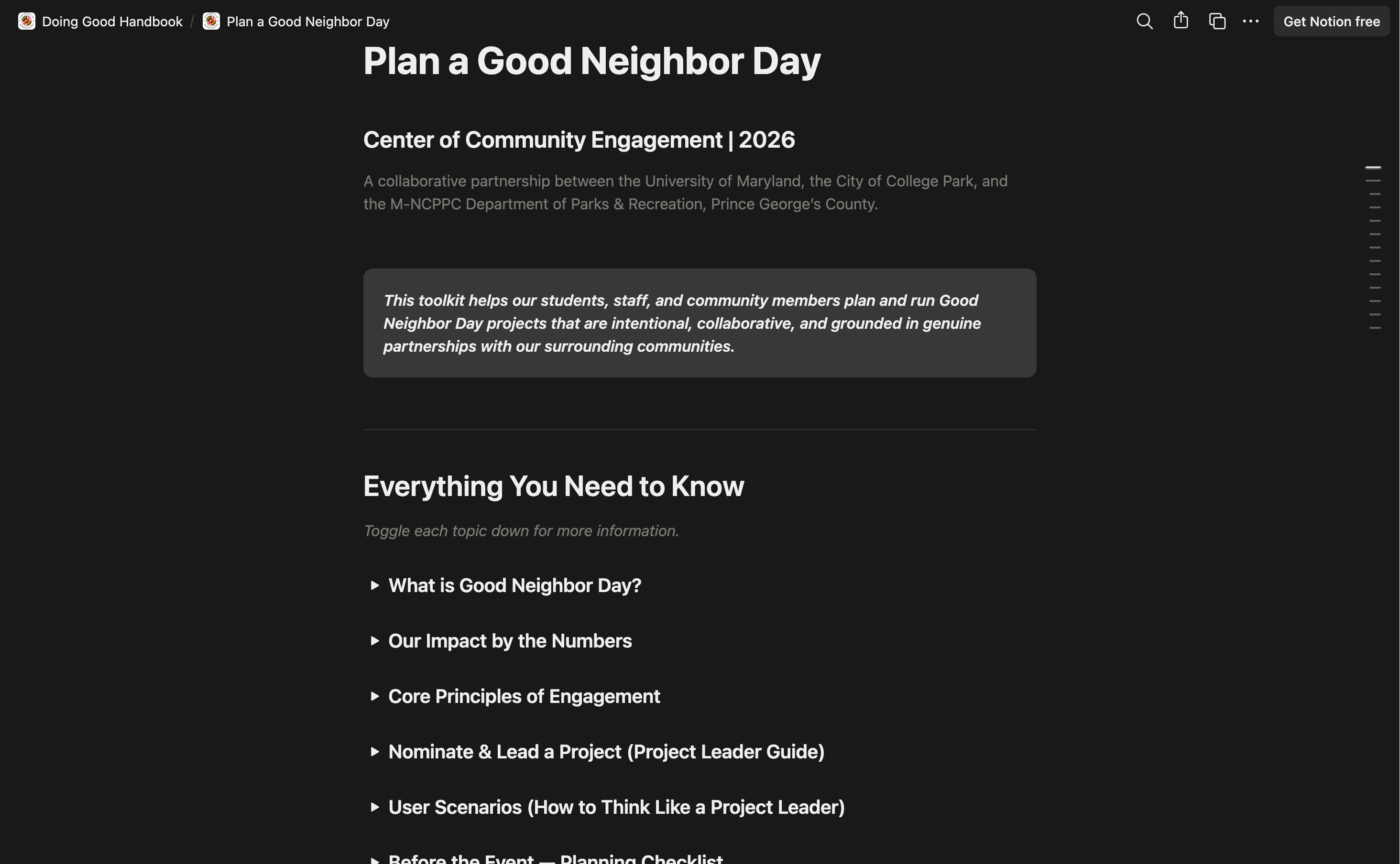
TOOLKITS
As the project evolved from creating standalone toolkits into building a broader platform for engagement resources, the “Running a Drive” toolkit currently exists as a wireframe concept for future capstone teams to expand upon. The “Plan a Good Neighbor Day” toolkit was fully implemented by my teammate, Caleb Nebiyu.
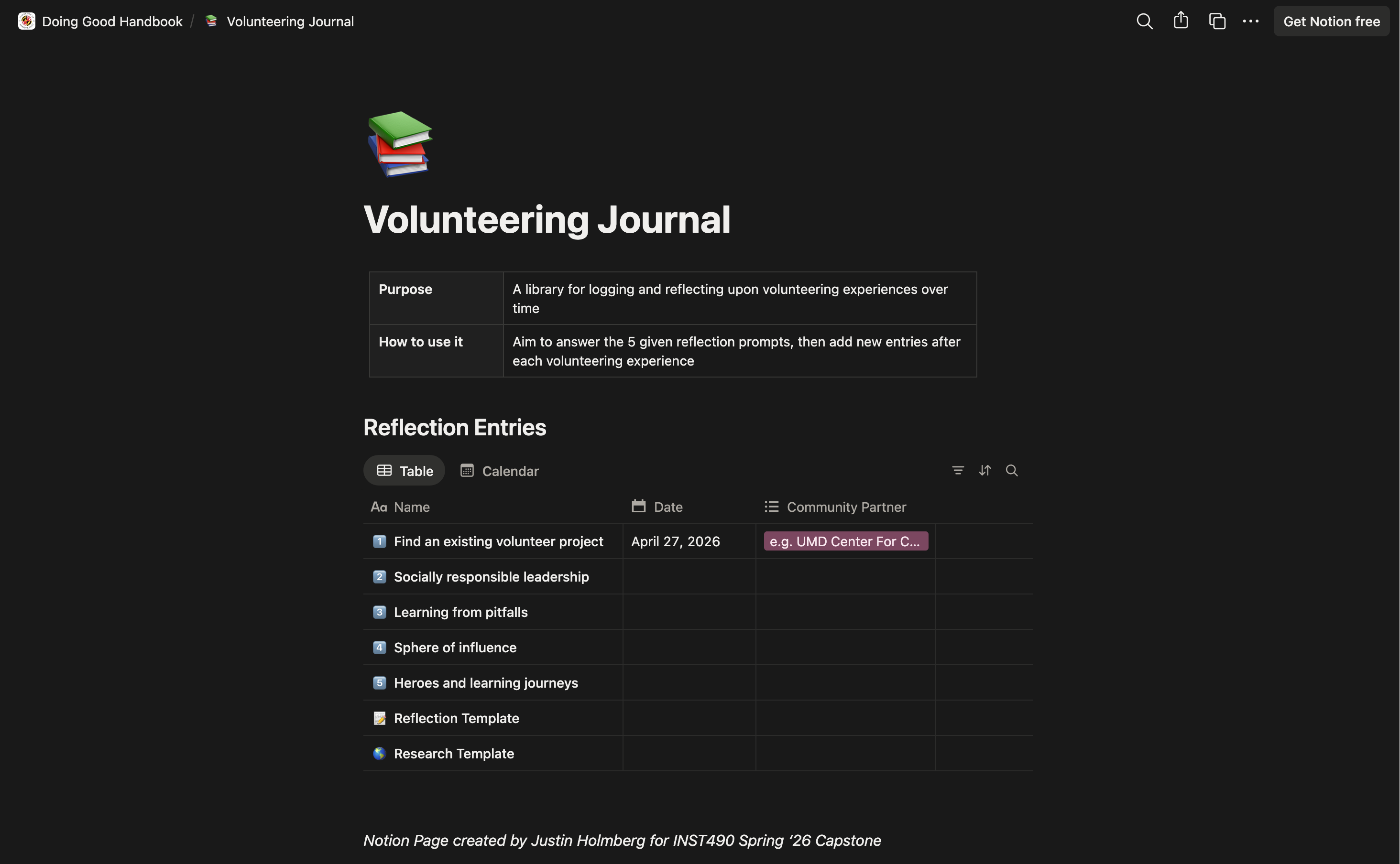
PERSONAL JOURNAL
A structured journaling and reflection space designed to help students document volunteering experiences, track personal growth over time, and critically reflect on community engagement through reusable templates and guided prompts.
CHOOSING NOTION
Compared with a website or slide deck, Notion's cloud-based and accessibility-friendly structure was a natural fit. Its support for pages, databases, tables, and collapsible content allowed us to organize information without requiring extensive custom development. Additionally, students already have access to Notion Premium through the university, and the client was interested in exploring Notion as a long-term student engagement platform.
TRADEOFFS
External links, opportunities, and community resources, long-term usefulness depend on ongoing maintenance and curation. While Notion offers an intuitive user experience, students may still experience friction navigating large amounts of information without careful design and structure. Using Notion also introduced a dependency on a third-party platform rather than a self-hosted solution.